Financial stability is no longer a static goal; it is a high-speed pursuit. In 2026, a single algorithmic trading glitch or a geopolitical shift can evaporate millions in liquidity before a human analyst can even open a spreadsheet. For leaders, the emotional weight of this "continuous volatility" is immense.
Survival in this era requires moving beyond traditional audits toward a Continuous Intelligence model. This guide provides the technical depth and professional foresight needed to transform financial risk from a looming threat into a calculated competitive advantage.
What is Enterprise Financial Risk Analysis Methods?
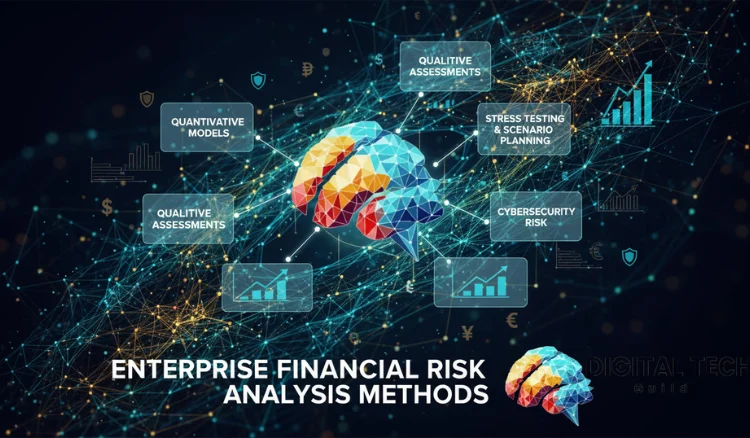
Enterprise Financial Risk Analysis Methods are a suite of quantitative and qualitative diagnostic tools used to scan a corporation’s "financial DNA." Unlike basic accounting, these methods predict future solvency by measuring the probability of loss across market, credit, and operational silos.
By 2026, these methods have shifted from periodic reporting to Semantic Risk Mapping. This involves using AI to interpret millions of data points—from SEC filings to global news—to create a live "Risk Heat Map" that informs every board-level decision.
Why These Methods are Critical in 2026
The current economic landscape is defined by the "NAVI World"—Non-linear, Accelerated, Volatile, and Interconnected. The Basel III Endgame regulations have tightened capital requirements for US banks, making the "cost of risk" higher than ever before.
Furthermore, the rise of AI-driven financial crime and deepfake fraud has added a new layer of "Operational Risk." Without robust analysis methods, corporations face not just financial loss, but severe personal liability for executives under new accountability frameworks.
Read also: Enterprise Software Trends Driving Digital Transformation
Key Benefits: Turning Defense into Offense
- Optimized Capital Allocation: By using Risk-Adjusted Return on Capital (RAROC), firms can identify which business units are actually creating value versus those merely carrying hidden debt.
- Institutional Trust: Adhering to the COSO ERM Framework signals to lenders and rating agencies that the company has a "mature" risk culture, often resulting in lower borrowing costs.
- Strategic Agility: Detailed Sensitivity Analysis allows firms to pivot supply chains or hedging positions weeks before a market "tipping point" occurs.
The 2026 Step-by-Step Risk Analysis Process
- Risk Identification (Entity-Level): Map threats against the ISO 31000 standard, covering everything from interest rate swaps to ESG compliance.
- Data Harmonization: Consolidate fragmented data into a Unified GRC (Governance, Risk, and Compliance) Platform for a single source of truth.
- Quantitative Modeling: Execute Value at Risk (VaR) and Monte Carlo Simulations to calculate the 99% confidence interval of potential daily losses.
- Stress Testing: Run "What-If" scenarios based on specific 2026 threats, such as a sudden 200-basis-point interest rate hike or a digital currency "flash crash."
- Agentic Mitigation: Deploy AI agents to automatically execute "hedging" orders when pre-defined risk thresholds are breached.
Real-World Case Study: The 2025 AI-Liquidity Squeeze

In late 2025, a Tier-1 US bank utilized Continuous Risk Intelligence to spot a pattern of "low-latency withdrawal anomalies" across multiple regions. While traditional audits would have missed this, their AI-driven Market Risk model flagged the event as a potential algorithmic attack.
By proactively adjusting their Liquidity Coverage Ratio (LCR) and utilizing the Fed’s standing repo facility, they avoided the "contagion effect" that crippled several smaller regional competitors. This proved that real-time analysis is the ultimate survival tool.
Expert Insights: Where Traditional Models Fail
While Value at Risk (VaR) remains a staple, experts warn of its "Blind Spot." VaR assumes normal market distributions; it does not account for "Fat-Tail Risks"—rare, catastrophic events. In 2026, top-tier firms supplement VaR with Expected Shortfall (ES) to measure the "worst-case" loss beyond the 99% threshold.
The consensus among CFAs and Risk Officers is that AI Governance is now as vital as financial modeling. If your risk models are built on biased or "hallucinated" AI data, the resulting "False Sense of Security" can be more dangerous than having no model at all.
Read also: Best SaaS Platforms for Enterprise Productivity
Who Should Lead the Strategy?
- Chief Risk Officers (CROs): Responsible for the technical architecture and integration of AI risk platforms.
- Audit Committees: Tasked with ensuring the firm meets SEC and PCAOB standards for internal controls.
- Corporate Treasurers: Who must apply these analyses to manage day-to-day cash flow and currency hedging.
Pros and Cons of Advanced Analysis
| Feature | Advantage (Pros) | Challenge (Cons) |
| Agentic AI | Real-time mitigation and 24/7 monitoring. | Requires massive "Clean Data" infrastructure. |
| Basel III Compliance | Increases systemic stability and trust. | Higher capital "lock-up" can limit short-term growth. |
| Scenario Modeling | Prepares for "Black Swan" events. | High complexity can lead to "Model Risk" errors. |
FAQs
What is the "Basel III Endgame" for US corporations?
It refers to the final set of global banking reforms that increase the capital banks must hold against risk, impacting corporate lending and interest rates.
How does Agentic AI differ from traditional risk software?
Agentic AI can independently recommend or execute actions, whereas traditional software only provides static reports for human review.
Is Value at Risk (VaR) still accurate in 2026?
VaR is a useful baseline but is now typically paired with "Stress Testing" to account for extreme market volatility and "tail risk."
Final Verdict
The era of "set-and-forget" risk management is over. Enterprise Financial Risk Analysis Methods in 2026 must be dynamic, AI-enabled, and grounded in global frameworks like COSO and ISO. By investing in continuous intelligence today, your organization doesn't just manage risk—it masters it.