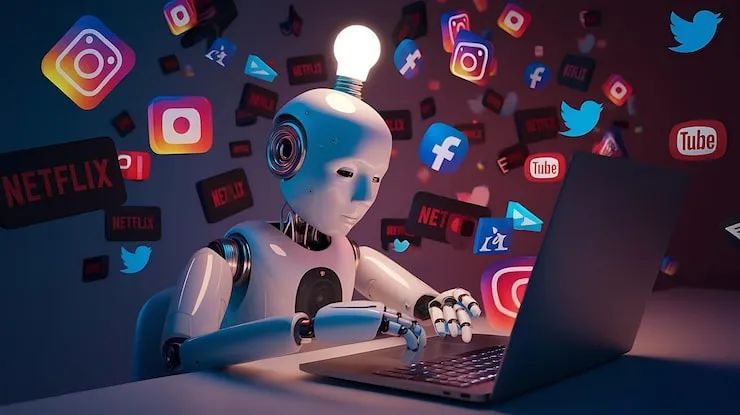
Imagine how many times you use social media throughout the throughout the day. Pictures of their pets, dance videos, updates on news funny memes, school announcements messages from friends show up on screens that are tiny within a matter of seconds. Social media sites have evolved into an enormous digital playground where thousands of users talk to each other, share their thoughts and showcase their talents. A new, powerful technology known as artificial intelligence also known as AI has begun to alter the way these platforms operate in the background.
Future social networks during the AI timeframe will be completely different from the ones we are used to now. These apps could feel more sophisticated or more personal or even more shocking. This article discusses what may be next in the future, using an easy words that 12 to 13-year-olds are able to comprehend.
What Is Artificial Intelligence?
Artificial Intelligence is the process by which computers are able to learn from patterns and data instead of being taught exactly what they should do each time. As an example, if the video player appears to be able to discern what video clips people enjoy and continues showing the same ones, this is AI in action. It analyzes what users are watching, liking, skipping or even comment on and before predicting what kind of video they will like next.
AI is a standard feature of social media in the present however, in the near future it'll become more sophisticated. It could better understand images and write faster or translate language instantly and detect harmful behaviour faster.
How Social Media Works Right Now
The majority of platforms use AI in deciding which articles will be featured first in a feed. If someone is a frequent viewer of cooking-related videos, then the cooking video will show. If someone frequently comments on videos about sports The app will show additional sports-related content.
The companies also make use of AI to recommend new acquaintances as well as recommend groups to join and display ads to match an individual's preferences. AI systems continue to learn through millions of activities every second. The future will see they are likely to increase their power and become integrated into nearly every aspect of the application.
Smarter Feeds That Feel Personal
A major change people are likely to observe is the personal nature of the feeds on social media become. AI is likely to know not only what subjects a user is interested in, but also what times they would prefer watching specific types of content. The platform could show peaceful music videos at evening, while showing energetic videos during the day. Or related to school during the week as well as leisure videos during weekends.
AI may also modify content to suit the mood. If someone feels stressed due to the content they are watching or typing or type, it might suggest posts with uplifting content instead of a sombre one. The concept of emotional awareness is in the process of being created However, many companies are working to improve it.
The smarter feeds can enhance the enjoyment of social media however, they do pose privacy concerns and the extent to which apps can know about users' emotions.
AI Helping People Create Content
A different major shift in the way AI will assist users in creating postings. The future of platforms might include built-in software to suggest captions, improve mistakes in spelling, boost photographs, cut background noise from videos and even aid in creating quick animations.
A person who is a fan of drawing, however has trouble editing video might want to use for help using an AI software within the application to convert sketches into a video. Students who are creating a blog article might need help in arranging pictures in order and writing out a concise explanation.
This will make it possible for anybody to express their creativity This is not limited to people who have extravagant equipment or specialized training. In the meantime it's going to be crucial for the viewers to understand what was produced or significantly altered due to AI in order to understand what they're seeing.
Virtual Influencers and AI Characters
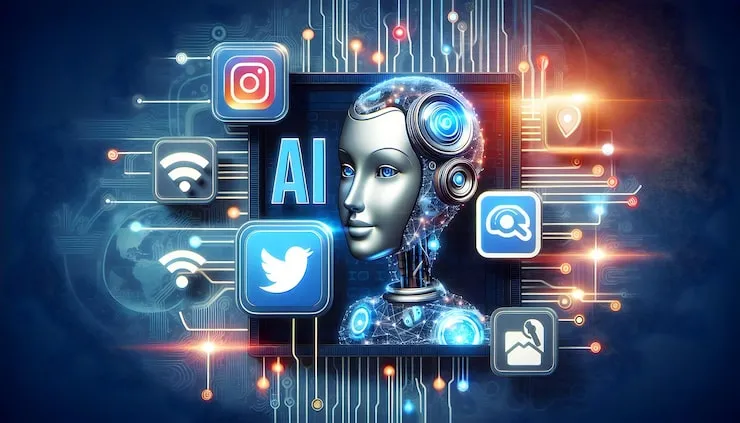
In the AI time, some social media profiles may have no connection to human beings even. Virtual influencers are models created with computers and AI. They are able to post pictures and videos of themselves talking and interact with their fans via comments or messages.
They could appear in commercials, endorse music, or hold live events in applications. A few people enjoy them as fun and imaginative but others would rather to follow real people living actual lives. When these characters are increasingly popular, they may require names so that users can identify the person or thing they're interfacing with.
Fighting Harmful Content Faster
One bright side of AI's potential in social networks is the capability to identify problems swiftly. Injurious posts like bullies, hate speech, false news, and scams are easily spread on the internet. Human moderators can't see everything and AI systems aid in assessing huge amounts of information and flagging suspect content.
The future is when they could be more proficient at comprehending humor, context, as well as different languages. They may block dangerous messages before they reach a lot of people, or alert those who use them when they think something is unsafe or deceiving.
These platforms could be more kinder and more secure for children, but there will be mistakes and oversight by humans will be crucial.
Deepfakes and Trust Issues
Although AI helps create entertaining and interesting content, it can also bring difficulties. The biggest concern is deepfakes (also known as deepfakes) are films or audio files created by AI that appear authentic, even though they're fake. One could make it appear as if someone said or perform something that they never really did.
As technology advances Social media companies must work harder to spot fake news to stop the spread of fake media. They can employ instruments that search for small clues generated by AI technology, such as weird lighting or odd movement.
Instructing users, especially younger people, to consider attentively about what they view on the internet will be important during the AI age.
More Real-Time Translation and Accessibility
AI will also increase the reach of social media. The real-time translator tools can allow individuals from various nations to communicate easily, even though they don't speak the identical spoken language. Captions can be automatically added to videos to those who are unable to be heard, and pictures might be written for those with difficulty seeing.
They can aid in connecting people from all cultures and enable platforms to be more welcoming. Social media may transform into a space in which ideas are able to travel further and further than they did previously.
Privacy and Data Concerns
In order for AI to function effectively for it to work, it generally requires lots of data. Social media is a great example. information includes the content that people view and click on, as well as what they write and then share. As the technology evolves, and AI gets more sophisticated the platforms could collect more data to enhance their algorithms.
It is an essential subject. The government, parents as well as users are likely to demand that companies be transparent regarding the data they gather and how they utilize it. These new regulations and tools could seem to allow users to control their data more effectively and make it easier to choose which kinds of information can be kept or decided on what their personalization of the feed will be.
The balance between helpful AI tools while still respecting privacy will be one of the greatest problems for companies that use social media.
Social Media Might Feel More Like Virtual Worlds
The other possibility for the future is that social networks will become virtual worlds rather than scrolling feeds. Through AI and other virtual reality technologies individuals could join virtual spaces online where they can take on the role of avatars, go to performances, play games or even study with each other.
AI can control the background information or create landscapes in a flash and help to manage large audiences at gatherings. Cities with different populations could appear to be sitting in the same space regardless of being thousands of miles away.
It could also make social media more interactive and immersive and change the way people view their time on the internet.
How This Could Affect Young People
Teenagers and students Social media powered by AI will affect the way they study as well as relax and share their thoughts. The positive aspect is that innovative tools and features for translation can aid in school assignments as well as global connections. Moderation and safety systems could help stop scams and bullying.
The downside is that there is more fake videos to be aware of as well as more pressure to be impeccable If AI software makes photos and videos that are flawless. The ability to learn digital techniques, such as the ability to check sources and comprehending the algorithms' workings are going to become as crucial as reading and math.
The Big Picture
Social media's future within the AI timeframe is full of intriguing possibilities as well as serious issues. The feeds of the future will be smarter and more personalised to every person. Making content could become simpler and more creative thanks to AI aids. Virtual influencers and digital realms might alter what it means to become "online famous." Safety methods could be improved, however the new kinds of fake news media may be created in the meantime.
This is a clear indication that AI isn't just a minor attribute. It's now one of the primary factors driving the evolution of social media.
Final Thoughts
The first social media sites were simple websites on which people could upload pictures and messages. In time, they developed into vast networks that impact media, information and relationships around the globe. With the advent of the AI age, these platforms are expected to get more creative, powerful and sophisticated.
If you're a 12-year-old or 13 year-old, learning about the new technology is like having glimpses of what the digital world will look in the teenage years and even beyond. Understanding the ways in which AI affects what is displayed on screen, the way the content is created, and the way information is distributed can make it easier for young users to take advantage of social media, while remaining mindful and secure.
When the next video suggestion feels precisely timing or even a caption creates itself, it could offer a tiny glimpse of the future of AI that's in the process of unfolding.